Articles
AS A RELIABLE PARTNER ON YOUR SIDE,
WE WILL GROW WITH YOU.
KASAN Newsletter - January 2026
2026.08.28
I. Supreme Court Clarifies Tax Treatment of Royalties for Unregistered Foreign Patents
The Supreme Court has ruled that royalties paid for U.S. patents not registered in Korea may still constitute Korean-source income under the Korea–U.S. Tax Treaty, provided that the underlying patented technology is used in Korea. As a result, the Court overturned its prior precedent, which had excluded royalties for unregistered foreign patents from Korean-source income based on the principle of patent territoriality.
This ruling arose from a royalty payment dispute involving SK hynix. SK hynix had been sued for patent infringement by a U.S. company and subsequently entered into a settlement agreement, under which it paid royalties in exchange for a license to use the relevant patented technology. SK hynix later sought a refund of corporate income tax, arguing that the royalties were paid for U.S. patents not registered in Korea and therefore did not constitute Korean-source income.
The lower court accepted this argument, holding that, under the principle of patent territoriality, the use of an unregistered foreign patent could not be contemplated in Korea, and thus the related royalties could not be treated as Korean-source income.
The Supreme Court, however, took a different view. It held that, under the Korea–U.S. Tax Treaty, the term "use" does not refer to the use of the patent right itself, but rather to the use of the manufacturing methods, technologies, or technical information embodied in the patent (i.e., the patented technology). Accordingly, even if a patent is not registered in Korea, royalties paid for patented technology used in Korea constitute Korean-source income.
The Court further clarified that the principle of patent territoriality merely means that the domestic use of such technology does not constitute patent infringement against a foreign patent holder. It does not imply that the patented technology lacks economic value or that licensing arrangements for such technology are impermissible.
This decision significantly changes the standard for determining the source of royalties paid by Korean companies to foreign patent holders. It is expected to have a substantial impact on international patent licensing arrangements, withholding tax treatment, transfer pricing, and overall tax and dispute risk management.
Following the ruling, the tax authorities have stated that Korea's taxing jurisdiction over royalties related to unregistered foreign patents has been confirmed, and have indicated that a considerable increase in tax assessments and long-term tax revenue may result.
II. Seoul High Court Rules in Favor of Plaintiff in Melona Packaging Unfair Competition Case
In a lawsuit seeking an injunction against unfair competition concerning the ice cream product "Melona" and the allegedly similar packaging of "Melonbar," the Seoul High Court reversed the lower court's decision and ruled in favor of the plaintiff.
The key issue in this case was not whether individual elements of the Melona packaging—such as the background color, the product name logo and its layout, or the placement of the melon imagery—were protectable on their own, but whether the "overall image" formed by the combination of these elements constituted a protectable subject matter under the Korean Unfair Competition Prevention Act.
Plaintiff's Product (Melona) / Defendant's Product (Melonbar)
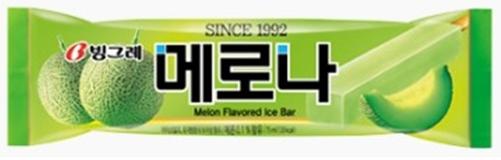
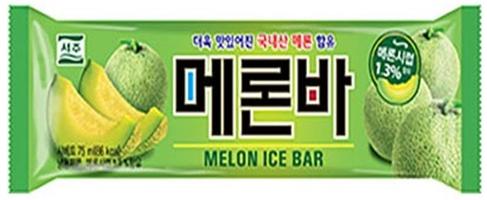
The Seoul High Court held that, while individual design elements may be freely used, the overall image created by their combination can be recognized as a well-known and distinctive indication of source associated with the plaintiff.
In particular, the court noted that the plaintiff had consistently used the same Melona packaging design for nearly 20 years, emphasizing that long-term, continuous, and consistent use is a critical factor in establishing protection for product designs under unfair competition law.
The court also placed significant weight on the results of a consumer survey conducted through objective procedures. A substantial number of respondents indicated that they were likely to mistake or confuse the defendant's Melonbar packaging with Melona or with the plaintiff's product, leading the court to find a likelihood of confusion as to the source.
Accordingly, the Seoul High Court concluded that the defendant's use of the packaging constituted an act of unfair competition by exploiting the plaintiff's well-known indication, and ordered the cessation of use of the infringing packaging as well as the destruction of products already manufactured and distributed.
The defendant has filed an appeal to the Supreme Court. Depending on the Supreme Court's final ruling, the legal standards for determining unfair competition in the context of package design are expected to become further clarified.
-
Previous KASAN Newsletter - February 2026
2026.08.28 Next No more articles.